The radio industry is at a critical crossroads, facing a “measurement crisis” that has evolved into a battle for relevance in a digital-first world.
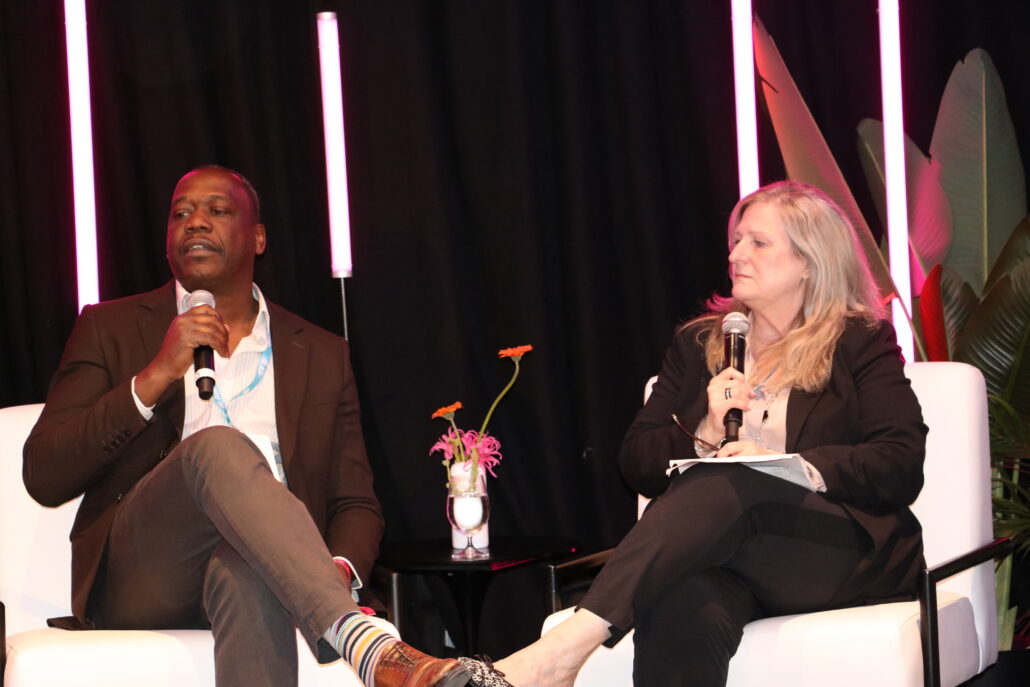
Radiodays North America panel, “Signal Lost: Radio’s Measurement Crisis is Now a Fight for Survival,” brought together leaders from across the broadcast, retail, and tech sectors arguing that while radio still possesses massive scale, it must adopt real-time engagement data to survive the rise of AI-driven media planning.
The panel, moderated by Radio Connects President Caroline Gianias, moved beyond the traditional debate over “currency” (ratings) to focus on a more urgent need: “measurement for insight.”
The performance gap
For many national advertisers, the lack of immediate, “clickable” data has made radio a difficult sell in an era of last-click attribution.
“Agency planners need to be able to tell their clients what worked,” said Adam Ritchie, VP of Product & Innovation at Canadian Broadcast Sales (CBS). “When you start to get more into performance, that’s where it gets a little bit more challenging. People want it… they ask us every radio plan: ‘How can we help our clients understand that radio is working?'”
Nuno Bamberg, Chief Marketing Officer at Sleep Country Canada, highlighted the danger of radio being excluded from modern marketing models. He noted that while Sleep Country was “built on radio,” the industry must speak the language of the CFO.
“If this room was all dark, and I’m trying to see who is in here just based on laser beams—like performance marketing—I’m going to miss a lot of people,” Bamberg illustrated. “Radio works very much in terms of that [broad] reach. But if the marketers don’t have conviction in the medium, it becomes harder because the numbers that are high-speed are working against us.”
Bridging the analog-digital divide
Herman Campbell, President & CEO of Aurbit by AdEase Media Intelligence, presented a potential “magic bullet” for the industry: audio recognition technology that allows listeners to engage with over-the-air ads via a mobile app.
The tech creates a digital “fingerprint” of a radio broadcast, allowing a listener to tap their phone and instantly access a promotion, find a nearby store, or engage with a radio personality, creating a trail of “leading indicators” that radio has traditionally lacked.
“What the advertiser and the broadcasters get back is not just a passive audience now, it’s how the audiences start to engage with their promotional efforts,” Campbell explained. “We can show how it’s being performed, which is a huge data point that’s missing right now.”
A looming concern for the panel was the rise of Artificial Intelligence in media buying. Because radio is a difficult medium for AI algorithms to “scrape,” there often aren’t the case studies necessary to get radio included in automated national planning cycles.
Gianias noted that without data to feed these “black box” models, radio risks being ignored by AI that favours national TV or digital giants.
“AI is fueled by data,” Campbell responded. “The important thing is to collect the data, and from there, we can basically build any predictive modeling we want.”
Despite the availability of new tech, the panel acknowledged that the Canadian market is notoriously slow to move.
“Canada typically does move pretty slowly on these types of technology advancements,” Ritchie noted, though he emphasized that the opportunity to bring digital-style optimization – knowing which creative version or time of day is driving the most traffic – to traditional radio is “a huge, huge opportunity.”
“I think we need a more consolidated voice across all of the audio channels,” added Campbell. “They all work really well together, and pitting against each other – traditional radio, streaming radio, on demand music, Spotify-type platforms, all of your podcasts – like us competing against each other, isn’t gonna work.”