The road cases are packed up, the wires are coiled and put back in the box, and my time in Livigno, Italy working at Snow Park has come to an end. Now that I’m back on Canadian soil, I have almost recovered from my jet lag.
Heading back to the arena, the results of Olympic hockey are something that is talked about a lot. The deep and utter sadness of the men’s and women’s teams losing to the Americans started many of my return home conversations.
 I am here to report that the feeling on the ground in Italy during the Olympics was not one of loss. I wish there were more broadcasters from Canada who were able to travel and tell the story of what was happening. The scandals, the cheating, the difficulties of the Olympics somehow managed to make it home on a greater scale than what amazing things were really happening on the ground. Although I know people who watched enjoyed the competition and the quality of performances.
First off, fans make an event, and the last Olympics in Beijing lacked this important part of the Games. Fans added to the experience and pushed the competitors to do their best. Something about having your friends and family join you to try to fulfil your dream across the world on the biggest stage your sport has to offer creates an energy and excitement, and performance that everyone at home did see on camera. The atmosphere that helps foster that is, in part, due to the excitement behind the scenes.
For those of us working, I think we all had a lot of pride in how much people at home talked about the events we were working on. It was the perfect time to look at something other than world politics, which has dominated our screens for the past six months.
Women’s sport a growth market
I watched the women’s game in a local restaurant with Americans, Canadians and others from all over the world. When Canada lost, I was sad for just about a minute, but what everybody said about that game in the mountains in Livigno that night was that it was a great hockey game to watch.
The story that came out of this for me was knowing how great this will be for the PWHL [Professional Women’s Hockey League], which is doing a Takeover Tour after the Olympics. This fresh league is trying to make a real go of it, and on the biggest sports stage in the world, the players really got to shine. The best women’s hockey is being played right here in North America, and we all have access to see it and broadcast it.
Many broadcasters are just now learning that investing in women’s sports and new leagues is a growth market. It also augments linear and on-demand and new content are bringing more rewards every year. The value of even 20,000 to 100,000 viewers on a streaming platform is starting to show results as advertisers rediscover what it means to be attached brands to premium content, and not having their brands run alongside the randomness of YouTube and social media algorithm-driven content.
 I will tell you a secret about women, if you did not know it already – we often like to hang out together, we like to be together, we like to support each other. I am often more energized and open to new experiences when I am hanging out with other women. This is the secret to women’s sports: we will bring friends and children and family to games to explore it with us, whether we are experts in those sports or not. When the women’s game was over, I only had a minute of sadness until somebody else said it was a great hockey game and so much fun to watch. The league captured over 40 medals during one medal ceremony, and watching this felt like a big celebration for the PWHL. Players captivated the sport at the Olympics, and with their cross-country tour happening this next month, with most arenas almost sold out, it is a great opportunity for broadcasters, media outlets, fans of hockey, and groups of people who simply enjoy good sport to come together.
The atmosphere at women’s sporting events is also slightly different. Even during their runs or qualifiers at the Olympics the energy is a bit lighter, more fun, a kind of excitement that comes from underdogs getting to play on the big stage. The kind of energy that groups of women bring to events, laughter, smiles, empowerment, a kind of relaxed joy that is really fun to be a part of. I experienced this for the first time at a game for the FIFA Women’s World Cup in France in 2019, a tournament I still see as a tipping point in Women’s sport.
With this rising, there is an opportunity. New leagues and new broadcast deals just like the recently announced CEBL [Canadian Elite Basketball League] and CBC deal. While this does not always mean large crews and big shows for those working behind-the-scenes there is still opportunity for skilled technical workers to be a part of these events, whether from smaller companies providing services, freelancers, or technical services and rentals to independent producers providing small systems and giving opportunity to locals to try out new roles and most importantly for young people to start somewhere in our industry.
While there was also sorrow when the men’s Canadian team lost, the us-versus-them was not what we were experiencing on the ground in Italy. To me, it was a huge win for the NHL. It really showed that the best hockey in the world is played in North America in arenas just like the one that I work at in Winnipeg.
Yes, we all want our team to win, we all want the cup, but in almost every major city we have access to the best hockey watching experience in the world. That is the real hockey story from the Olympics, in my opinion.
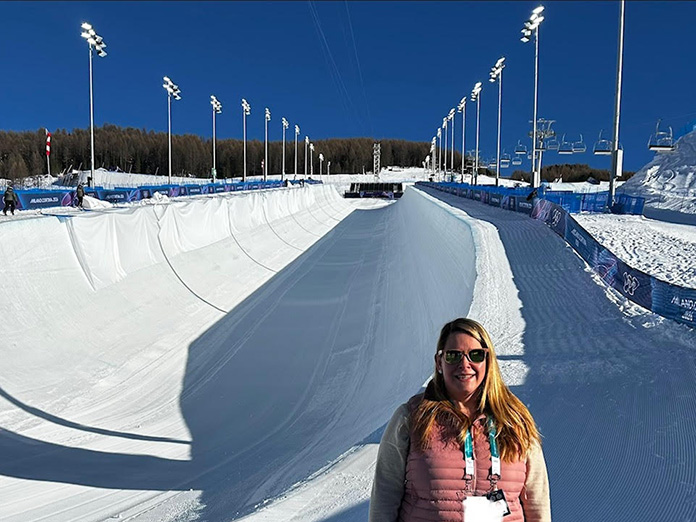
But the Olympics were not just about hockey. Livigno Snow Park, where I worked, hosted five events: Big Air, Halfpipe, Slopestyle, PGS and Cross, all sports I knew very little about, and still I am dazed and amazed at what the athletes could do.
REMI setups here to stay
It was also very clear technically from this Olympics that REMI (Remote Integration Model) setups are here to stay. We might even say we are entering the golden age of the REMI. Large events like the Olympics and FIFA know how costly it is to build custom stadiums or venues in one city, or to build all of them in one location. So these events are spreading out and choosing locations based on the best opportunity to showcase that sport.
You could see it with OBS planning, the fact that they had multiple cities as part of the opening ceremonies, as athletes were preparing to compete the next day. Many of the cities like Livigno, were a four-hour drive from Milan.
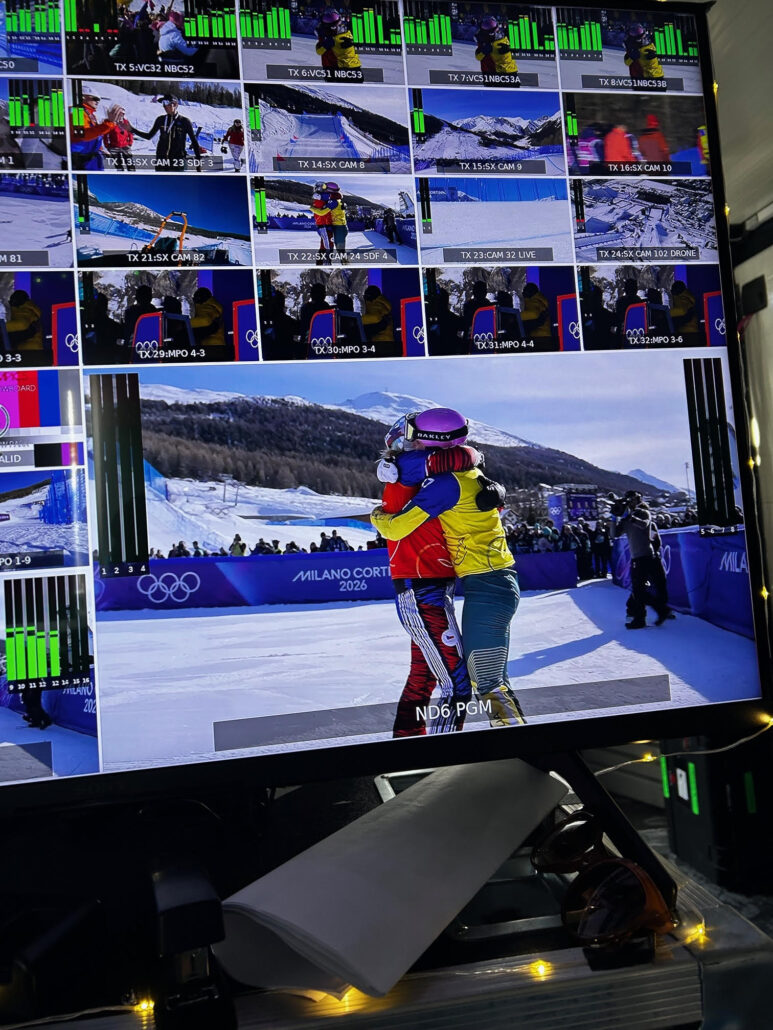
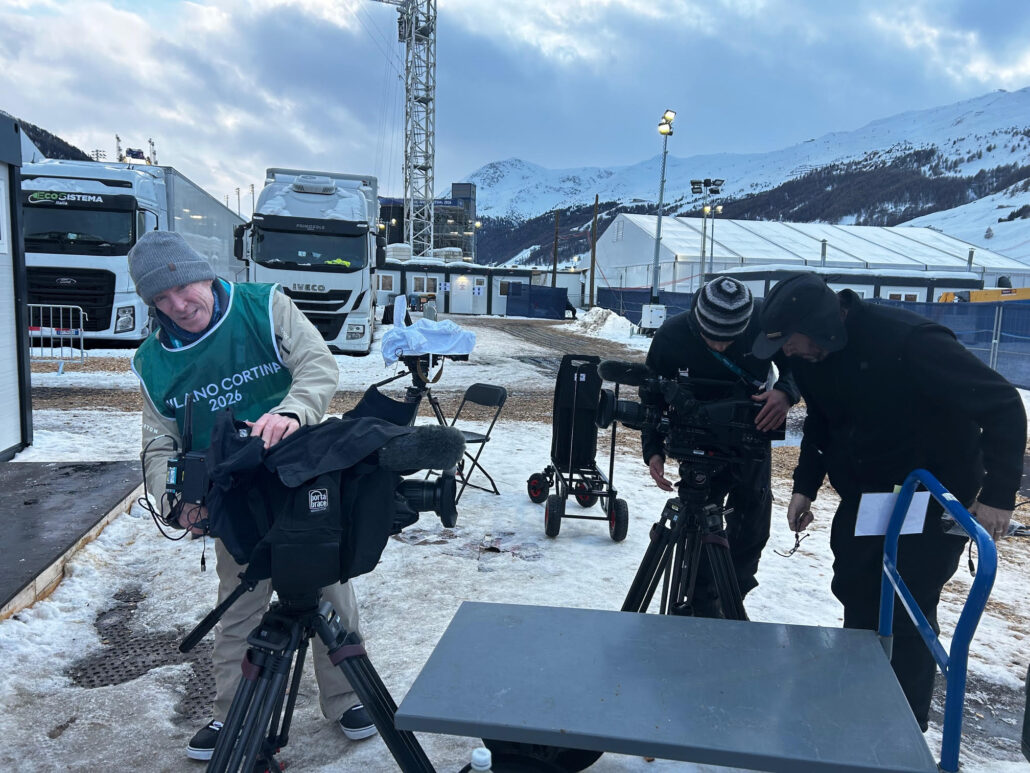 The other thing is that drone and RF technology have come such a long way that you can now build a venue that is temporary that may not have all the permanent hard camera positions you once needed. With drone and RF technology, you can still cover the athletes in a way that showcases their run down the hill or their bobsled journey without as many hard camera positions. The drone also captures the speed and the view of the venue in a way that helicopters in the past were not able to.
The balance however is that when you want to do immersive sound and have every swish of a ski and every noise of a blade going down these tracks, microphones pick up that drone motor frequency very easily. It is hard to block out those sounds when the motor is changing speed and is noisy enough and close enough to an immersive microphone to be pretty annoying to a mixing audio engineer.
This is why I love broadcast engineering. It is never perfect. It is always a work in progress. There is always learning, and things that worked well and other things that can be improved upon, and sometimes you only learn this once all the cameras and microphones are on, and production is on the headsets in the same room. It’s always dynamic and never dull.
Emerging tech
Some of the things talked about behind-the-scenes were Sound Bullets, alternative audio test gear to the Qbox, with many happy with some great little features. Everybody seemed to like it, plus how small it was to put on your belt clip. For many, this was their first time working with Appear transmission technology. During these REMI shows, attendees were introduced to its GUI, features, and impressive capability to transport up to 44 HDI 1080P signals through a 10MB pipe.
There was also a lot of talk about immersive audio and letting sounds tell stories beyond commentary, which given the variety of platforms that content is arriving at, makes a lot of sense to have good audio or captivating immersive audio so that the content could stand alone in moments where commentary is not occurring. I also heard a lot from everybody about their viewing experiences on CBC Gem, and I purchased a VPN so that I could watch some Canadians compete in other sports. I enjoyed watching this when I was not on shift.
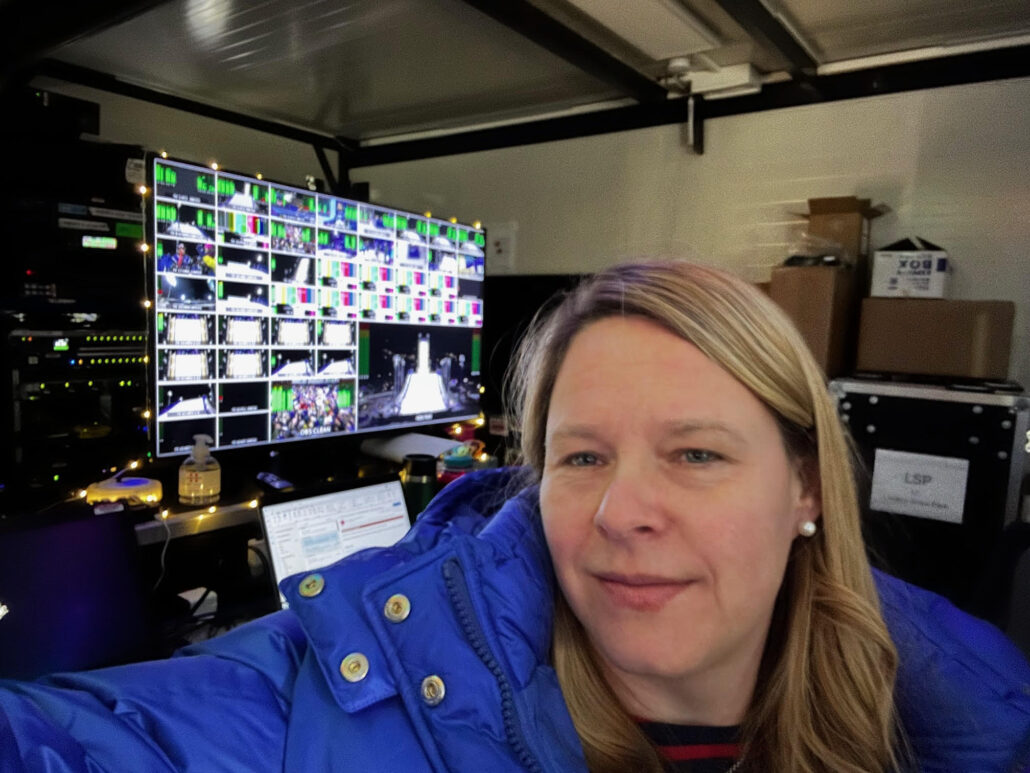
I had the privilege of working with an excellent team at NBC this year, where a strong emphasis on preparation made all the difference. By reviewing and aligning on the system in advance, both production and engineering arrived on site with a clear plan, critical when you’re jet-lagged and under time pressure. As a result, the system was nearly plug-and-play, with about 90% functioning as expected upon connection.
Key elements like router configuration, names, aliases, and virtual audio routing in a hybrid environment had already been completed ahead of time, which is no small task on a system of that scale. This meant we weren’t building from scratch during integration, but instead focusing on final commissioning and the inevitable on-site adjustments that come with live production.
 I wish more Canadian reporters were able to travel to the Olympics, but I was happy to see CBC doing street interviews in Livigno with families and telling stories from our venue that I knew were making it back to Canadians.
One of my highlights was watching Megan Oldham win bronze and gold at my venue and hearing the Canadian anthem. But I will say that the great thing about this international experience is that sometimes you even tear up when you hear other anthems from other places played, knowing those athletes themselves are so proud to be standing on the podium.
For those working behind the scenes with media entertainment tech, no matter the role, the length of the event, the intensity, the long days, the extreme locations, the weather makes it a career experience unlike no other. The camaraderie, the teamwork, the coming together and seeing premium content consumed across the world is rewarding.
While I was gone, the new WABE executive was able to earmark our next conference for Oct. 5 – 7 in Vancouver. It is a great opportunity to get together. The conference is affordable, accessible and welcoming for anybody working behind the scenes in media and entertainment tech, whether it is radio, pro AV, live sports production or post production. We get all the vendors to come, we hold industry tech papers to help you learn about what is coming next, we invite panellists to discuss trends and things happening in the industry.
Most importantly, we come together as friends and colleagues, knowing that nothing in media and entertainment happens without a team of skilled, dedicated people working behind the scenes to bring stories to life.
Over the coming weeks, arenas will be filled with some of the best hockey in the world—but just as impressive is the team behind it all, ensuring those moments are captured, crafted, and delivered to living rooms across the globe. It’s a reminder that every great broadcast is built on the expertise, collaboration, and passion of people who care deeply about the work.
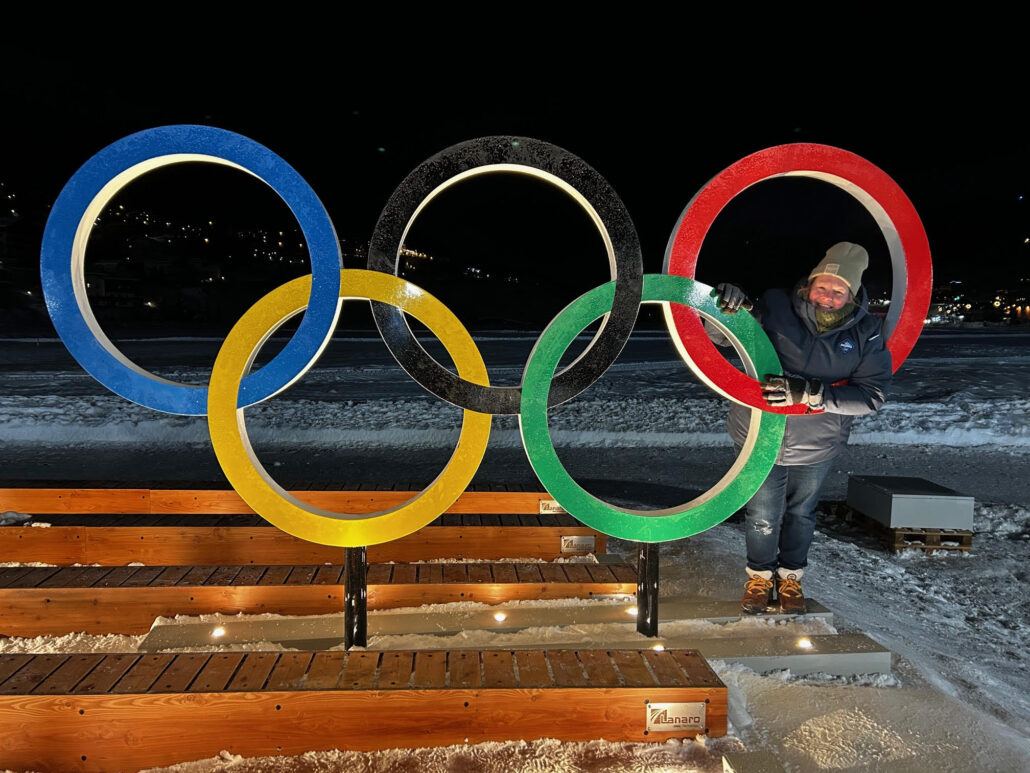 Canadians continue to make an incredible impact on the world stage. I recently shared a LinkedIn post highlighting some of the Canadians I know working overseas, and it’s clear that our strength, knowledge, adaptability, and work ethic make us trusted contributors at the highest level.
If you’ve ever dreamed of working on something like the Olympics, say it out loud. Share that goal. Pursue it. Opportunities like these often start with a conversation—and your path, like mine, might just lead you there.
And beyond sport, Canadians are telling powerful stories worldwide. Projects like The Girl Who Cried Pearls by Chris Lavis and Maciek Szczerbowski, produced by the National Film Board of Canada, remind us that our creative voices resonate globally. Their recent Oscar win is a testament to the kind of storytelling and craftsmanship that continues to put Canada on the map.