The sustainability of local news, the role of the CBC, and the impact of big tech and AI on the media ecosystem were among the topics tackled at Tuesday’s meeting of the Standing Committee on Canadian Heritage. But it was former CBC host Travis Dhanraj’s scathing testimony around what he alleges is a culture of “systemic control” and “tokenism” that took centre stage.
Dhanraj’s testimony served as the centerpiece of a broader inquiry into the “State of the Journalism and Media Sectors” in Canada.
The former host of Canada Tonight, who has a human rights complaint pending against the public broadcaster, told Members of Parliament that his belief in a public broadcaster that belonged “to the public, not to power” was shattered by internal toxicity. He told the meeting that then-President Catherine Tait’s refusal to appear on his program in 2024 to speak to CBC executive bonuses and his subsequent post to Twitter, triggered retaliation that led to his departure.
“CBC silenced and intimidated me for simply trying to do my job and fulfill my public service role to Canadians,” Dhanraj testified. “The tweet was not the beginning. It was the breaking point. For months prior, tensions had been building—not over performance, but over control.”
Dhanraj alleged that while he was used as a “symbol of progress” in CBC’s branding, his editorial independence was stripped away and his access to political guests centralized under specific “gatekeepers,” naming Power & Politics host David Cochrane as among those having authority over which politicians could appear on his own program.
“Accountability is not destruction. It is survival,” Dhanraj concluded, urging a mandate review of the broadcaster.
Democratic infrastructure under pressure
Raj Shoan, Interim Executive Director of Friends of Canadian Media and a former CRTC commissioner, also testified, describing journalism as “democratic infrastructure” that is currently being hollowed out by global digital platforms.
“Canada’s media system and cultural sovereignty are under pressure from forces that are structural, geopolitical, and technological,” Shoan asserted, calling on the federal government to treat journalism like a “national park”—something to be nurtured and protected—recommending that at least 25% of the federal advertising budget be directed to domestic news organizations.
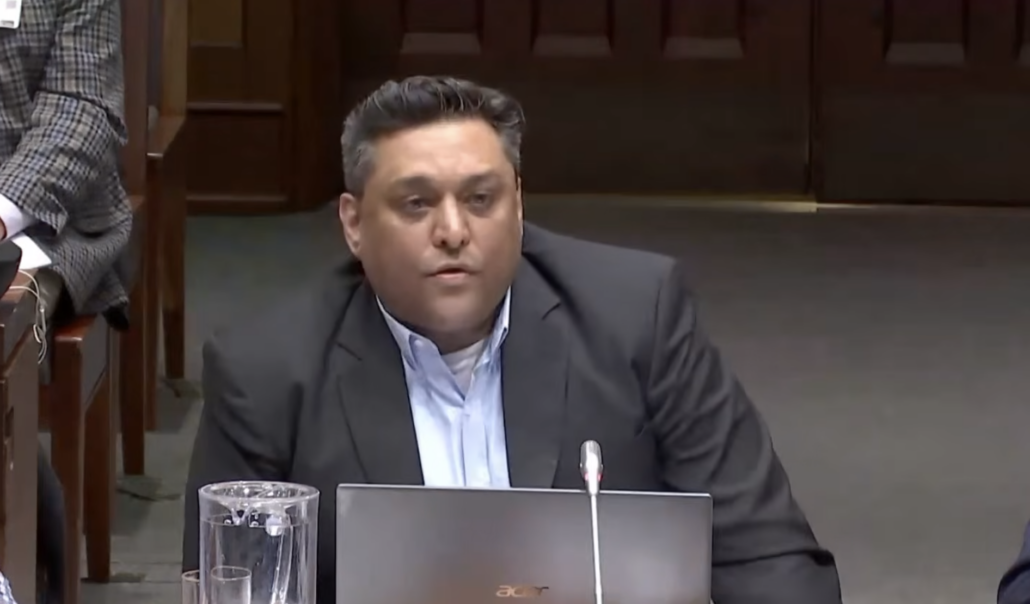
Shoan outlined five specific pillars for federal action to stabilize the media sector, emphasizing that the Online News Act and Online Streaming Act are vital, warning against exemptions for tech giants. Shoan also recommended expanding eligibility to include broadcasters in the Journalism Labour Tax Credit and an amendment to Section 19 of the Income Tax Act, ending tax deductibility for Canadian businesses that buy advertising on foreign digital platforms (like Google or Meta). He’s additionally in favour of AI protections and a new legal framework to protect journalists from so-called “content harvesting” by AI companies.
The committee also heard from the founders of Freshet News, a journalist-led non-profit formed in the wake of Glacier Media layoffs in B.C.’s Lower Mainland. Co-founders Mario Bartel and Janis Kleugh detailed the “dangerous” vacuum left when Glacier closed community news outlets, Burnaby Now and Tri-City News.
“What may have been no longer economically viable to corporate media was untenable to the journalists who have dedicated their careers to sharing those stories,” Bartel told the committee. “Putting community back into community news is the way forward.”
Kleugh highlighted the uphill battle for independent startups, noting that without charitable status or predictable grant opportunities, the “renewal” of local news remains precarious.
“We’ve come this far mostly on a volunteer basis…but the message from our communities is unmistakable: they want to be connected to each other, free from algorithms.”