Ottawa’s about-face on the Online Streaming Act was front and centre at last week’s FWD Conference in Kelowna, the inaugural combined event bringing together members of the Western Association of Broadcasters (WAB) and British Columbia Association of Broadcasters (BCAB).
With $600 million in new federal taxpayer funding announced Wednesday morning just as the conference was about to get underway, the policy pivot overriding attempts to regulate foreign tech giants was a dominant reference point.
Canadian Association of Broadcasters (CAB) President Kevin Desjardins characterized the federal funding announcement as a pragmatic, necessary lifeline for an industry on the brink, even if it leaves the fundamental imbalance between domestic and foreign media unaddressed.
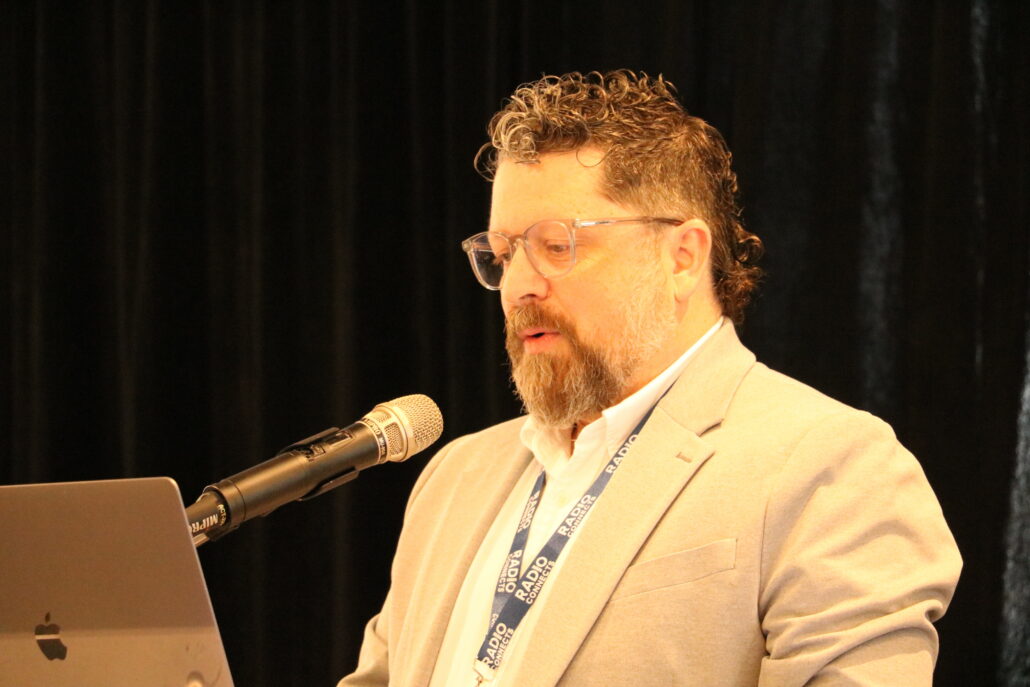
“Yesterday’s announcement by the government addresses the immediate and short term needs of Canada’s media sector, and it finds a way to get us past the back base arguments…at the trade negotiation table [and] in our court system,” Desjardins told FWD attendees Thursday. “It helps us move forward now.”
For CAB members, it’s anticipated the policy reversal will result in a more immediate influx of funding for local newsrooms who’ve been waiting for a legal challenge from foreign streamers to play out in federal court.
“The recipients of the Independent Local News Fund (ILNF) have waited more than a year for resolution of the streamers’ case against having to support news programming in Canada,” he explained. “So for them, this announcement means that the funds that they urgently need to keep journalists in their newsrooms, or to keep stations on the air, will flow more quickly. And it means that the Commercial Radio News Fund [CRNF] will be able to provide critical funds to help many of you keep your newsrooms alive, or even potentially to allow them to thrive.”
In the longterm, however, Desjardins told the conference that the asymmetry between Canadian and foreign players still needs to be addressed.
“We cannot continue to have a regulatory system that is firmly rooted in the past and continues to reach backwards towards the status quo to the benefit of those who receive entitlements from Canadian broadcasters,” he said. “Yes, exposure and airplay matters to musicians, but with a multitude of opportunities with streamer and social streamers and social media and other digital channels, Canadian radio cannot continue to be held to unsustainable levels of content regulations. Especially when the content created by the on-air talent at radio stations continues to be undervalued by the regulator.”
“The foreign streamers themselves estimate that in the near future, their Canadian revenues will be $10 billion,” Desjardins said. “They will get there, not by adding many more new subscribers…they will get there by charging Canadians more for their services. So when it comes to the Netflix tax, no one has been more ruthless about applying it to Canadian consumers than Netflix itself. And the same applies to Disney and Amazon and Apple and Spotify.“
Compounding that, he added, is the collapse of the domestic ad market, with foreign tech platforms now extracting over 80% of Canadian advertising dollars out of the local economy.
As Members of Parliament prepare to return to their home ridings for the summer, the CAB head urged local broadcasters to aggressively remind politicians of who actually serves their communities.
“For those MPs who went to bat for Netflix and other American streamers,” Desjardins said, “ask them how they intend to represent the interests of their constituents who work in the Canadian-owned broadcasting sector.”