Radio stations are focusing too much on the hits and not enough on the humans behind the microphone, radio futurologist James Cridland told last week’s FWD Conference in Kelowna.
Cridland told the room of Western Canadian media leaders that broadcast radio’s traditional selling points are dead, and its only path to survival is doubling down on human connection.
According to Cridland, the industry hit a permanent tipping point in 2019, when the mass adoption of streaming services like Spotify fundamentally shifted user behaviour. For the first time in history, music fell to the sixth most-cited reason for tuning into broadcast radio.
“No longer was music the main reason to listen to the radio,” Cridland told attendees. “It’s the people, it’s the DJs, it’s the hosts, it’s the shows. When those personalities leave the radio station, people tune in less. Some people leave radio forever because a personality or show that they enjoy listening to is no longer on local radio.”
Cridland said younger demographics, in particular, are leaving traditional AM/FM behind. While smart speakers and in-car tuning still see heavy live radio usage, mobile phones tell a starkly different story, with data showing live radio commands a mere 17% of audio consumption on smartphones, dwarfed by podcasts and streaming algorithms.
To survive, Cridland urged broadcasters to stop viewing radio as a transmission method and start viewing it as a service. Quoting NPR veteran Eric Nuzum, he challenged leaders to stop thinking of themselves as an AM or FM broadcast and start thinking of themselves as creators of “audio experiences that accompany listeners throughout their life, regardless of the platform.”
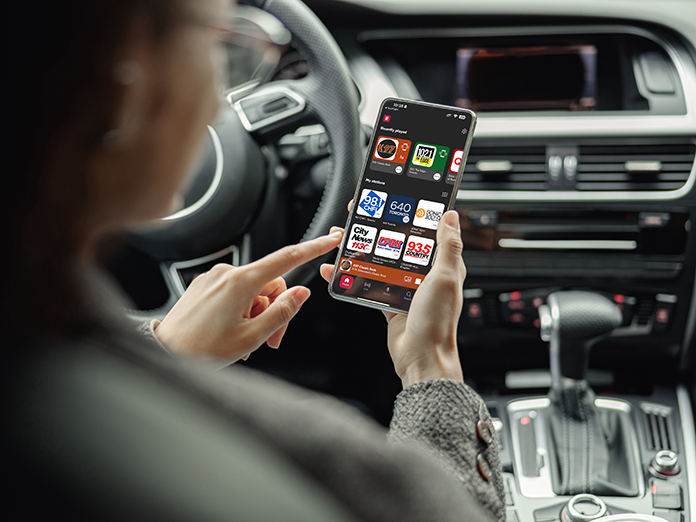 He maintains that reasons listeners historically tuned in – like discovering new music, and local traffic and weather – have been replaced by apps like TikTok, Google Maps, and instant smartphone alerts.
“In 2026, none of these are the reason why people tune into our radio station,” Cridland said, noting that radio’s modern “raison d’être” is something technology cannot easily replicate.
“Human connection, a shared experience, a club to join, a place to belong—that’s why people are listening to their favourite radio station now.”
Among the global case studies he highlighted where stations have leaned into the “the power of the human voice” over music to capture the public’s imagination are Australian breakfast host Christian O’Connell’s Rebel Bin Army, which saw the morning show retaliate against a lack of corporate marketing budget by asking listeners to put promotional stickers on their suburban garbage bins. The low-budget stunt saw the host personally deliver stickers to listeners’ homes, creating a massive local movement that beat out heavily-advertised corporate rivals.
View this post on Instagram
He also cited “The Race That Slows Down the Nation,” from Australian comedy duo Hamish and Andy – a parody of the Melbourne Cup horse race, featuring listeners running in two-person horse suits. The stunt drew over 7,000 fans to a town of just 500 people.
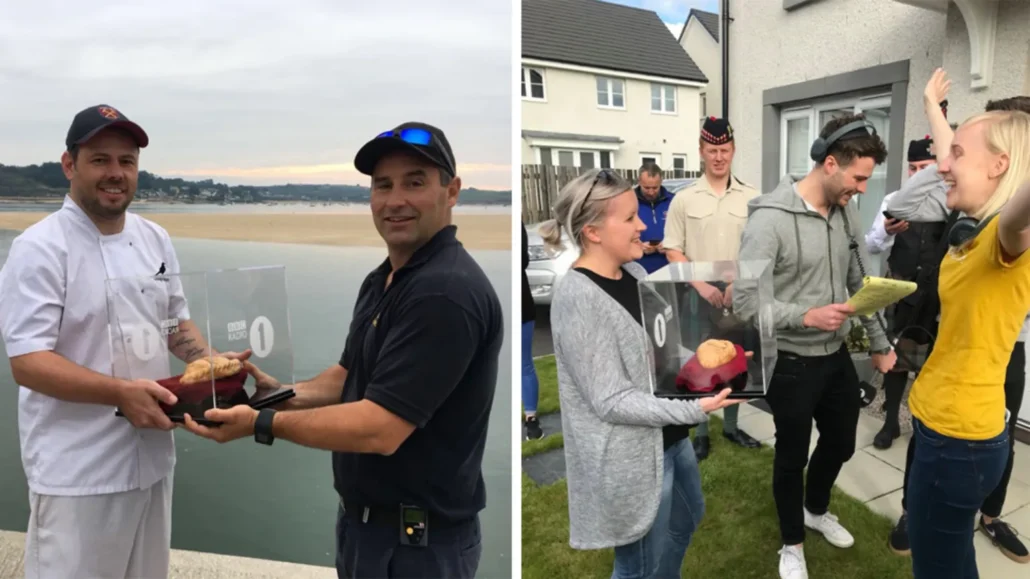
BBC Radio One’s Pass the Pasty also engaged a huge audience after a listener in Scotland admitted she had never tried a Cornish pasty. Host Greg James placed a pasty in a box with a GPS tracker and enlisted a network of listeners to relay it by car, truck, and train over 1,000 kilometers from southern England to northern Scotland.
Cridland says stations can create these compelling, spoken-word human experiences without great expense, referencing Italian broadcaster Filippo Solibello, who famously called the traditional radio studio “a padded cell where ideas go to die.” Instead, he suggests talent should use mobile, low-cost gear to get out onto the streets and actively talk with the public.
He additionally stressed that stations need to squeeze every drop of value out of their talent by clipping, recycling, and repeating great content across different parts of the day and weekend, noting that the average listener misses the vast majority of a station’s daily broadcast.
“Your radio station is like my coffee shop,” Cridland said. “I don’t go there for music, really. I go there because it’s a place where I belong. It’s the same people who I connect with everyday, and if I don’t tune in one day, then I’ve missed out on the gossip, I’ve missed out on the chats, I’ve missed out on the laughter. It’s a community of common interest.”