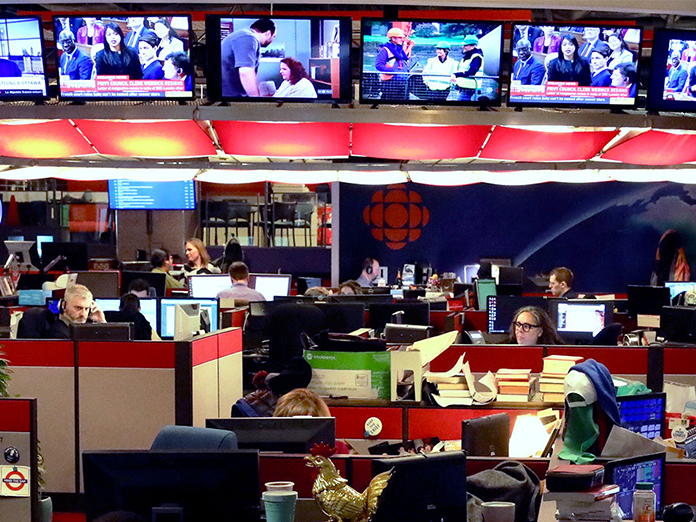
CBC says it’s continuing its practice of exercising “extreme caution” around the use of the words “terrorism” and “terrorist,” in response to an internal memo circulated earlier this week, reminding reporters not to refer to 9/11 as “terrorist attacks” ahead of the looming 25th anniversary of the air passenger hijackings carried out by Islamic terror network, al-Qaeda.
First reported by the Toronto Sun, the policy has sparked backlash from both the public and numerous pundits, including Rachel Thomas, the Conservative MP for Lethbridge, who serves as the Shadow Minister for Canadian Identity and Culture.
Thomas said in a statement that the directive “diminishes the reality of what actually occurred and is an insult to the victims, their families and everyone who lived through the horror of that day.”
“9/11 was a terrorist attack, plain and simple,” said Thomas. “Thousands of innocent people, including 24 Canadians, were killed by al-Qaeda that day: a listed terrorist entity under the Criminal Code and led by the murderous terrorist, Osama bin Laden.”
“In the aftermath, more than 40,000 Canadians served in Afghanistan in a war launched to dislodge and dismantle al-Qaeda,” she continued. “One hundred and fifty-eight members of the Canadian Armed Forces and seven Canadian civilians lost their lives during Canada’s mission.”
“The person responsible for this directive receives a paycheque funded by the very taxpayers who experienced the pain and loss of the devastating 9/11 attacks and the War in Afghanistan that followed. This person should be fired, and CBC leadership must immediately issue a clear apology.”
A CBC spokesperson told Broadcast Dialogue that the memo was “a reminder of the longstanding practice that favours the use of these terms with attribution in our reporting.”
The public broadcaster pointed to a 2023 blog from CBC News General Manager and Editor-in-Chief Brodie Fenlon, “How CBC uses the words ‘terrorist,’ ‘terrorism,’” that was published following the Hamas-coordinated Oct. 7 attacks on Israel.
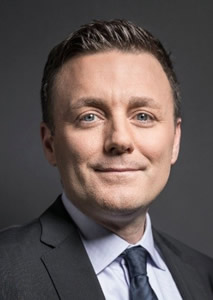
“Attribution of the word ‘terrorist’ has been our policy for decades — mirrored by other news organizations such as the BBC, AP, AFP and Reuters, among many others,” Fenlon writes in that blog post. “Our focus is to report the facts of such atrocities with accuracy, clarity and detail; to convey the scale and scope of violent acts wherever they occur; to quote the people affected, and to convey the views of officials and experts on these events. We bear witness. But CBC News does not itself designate specific groups as terrorists, or specific acts as terrorism, regardless of the region or the events, because these words are so loaded with meaning, politics and emotion that they can end up being impediments to our journalism.”
Fenlon wrote that the public broadcaster will generally avoid labelling any specific bombing or other assault as a “terrorist act” unless the term is attributed in a TV or radio clip, or direct quote online.
“By restricting ourselves to neutral language, we aren’t faced with the problem of calling one incident a “terrorist act” (e.g., the destruction of the World Trade Center) while classifying another as, say, a mere “bombing” (e.g., the destruction of a crowded shopping mall in the Middle East),” he continued.
“I am not trying to convince you that this is the only way to approach editorial language,” he added. “There are other forms of journalism out there and other approaches. But I do hope that my explanation has reassured you of our good faith in this work, based on our mandate as an independent public service news organization — even if you disagree with the outcome here.”