The story of the end of broadcasts of NHL games over CBC television is about much more than just that. The bottom line is that the only way to watch an NHL game on what we used to call TV will be to pay for it. I think that’s a big deal.
I’ve watched the predictable CBC hate flowing out over social media, some of it celebrating something seen as evidence of irrelevance, some screaming about the public money that goes to the corporation, some proclaiming that since they already have sports channels on their services, this is nothing.
I disagree.
But more so, I’m kind of disappointed with much of the reaction I am hearing from broadcasters. Specifically, from people on the radio. I think their privilege is showing. I think they’re not thinking it through.
People who work in broadcasting tend – in my experience – to subscribe to high value content packages. They have a professional need to be able to watch or sample as much as they can. Paying for that level of service is something they see as necessary; regardless of whether they grumble about the actual cost. They get access to the content they want.
But what about people who don’t have that level of service? What about those to whom it is simply not affordable?
It’s a little rich for me, hearing people working on a historic electronic communication medium that is available free to anyone with a receiver, suggesting it’s no big deal that content of high interest is being swept away from the other historic communication platform that used to be free to anyone with a TV.
Okay – most of the households in Canada subscribe to telecom services that will deliver them NHL games if they buy the right package or subscription. Most. Others don’t. Regardless of whether you use data from the CRTC, Numeris or the CBC, it appears that approximately 10% of Canadian households have no other way of receiving TV other than over-the-air. Is it because of the cost? Is it geographic location? Ten per cent seems like a not entirely insignificant number.
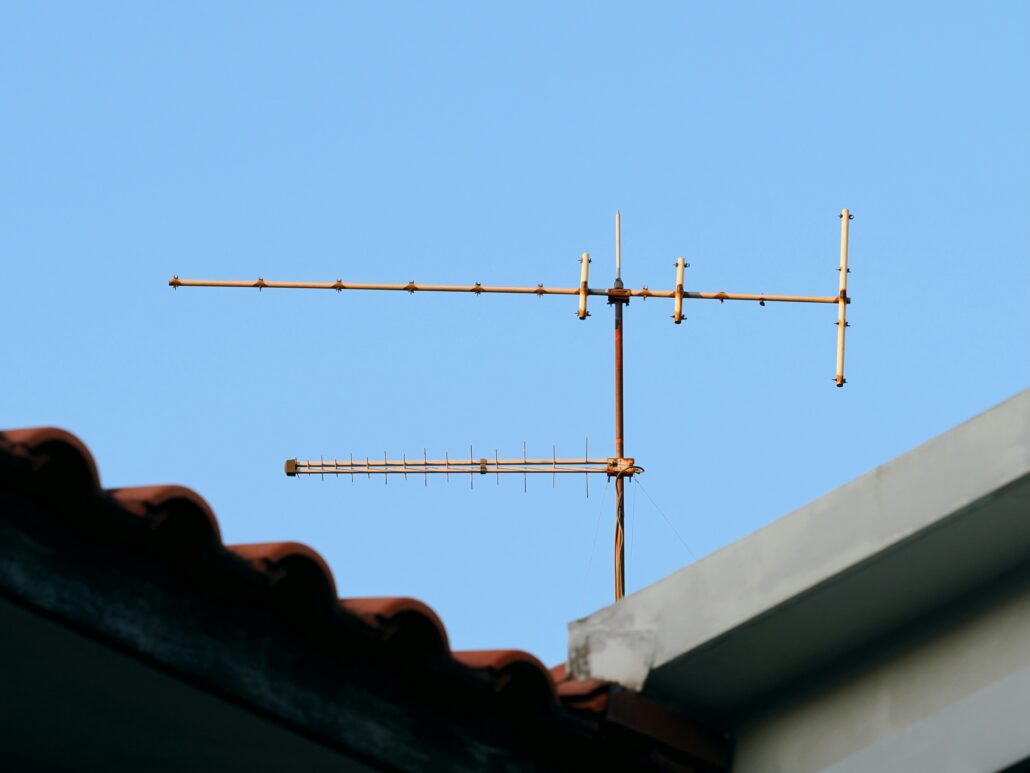 I note, as I walk about Toronto, the homes I see with various styles of TV antennas mounted. I often wonder, have they “cut their cable” services? Is it in protest of some sort? Is it the cost? Can they just not afford another delivery method? I see a lot of them.
I have a TV with an antenna connected in the outbuilding here at my home in the east end of Toronto. I know my listening and viewing habits may be a little different from those of many other people. There, I can sit and tune one of my selection of radios and listen off-air to stations from here and from far away. Often, AM stations I can tune in at night, from New York, Chicago, Cincinnati, Detroit; in many cases, stations whose streams are blocked outside the U.S. I can get those stations on the radio…just like listeners in those places. On TV, with a small antenna, I tune in the local channels of CBC, CTV, TVO, Radio-Canada, Global, OMNI, and Citytv. I use their free, over-the-air digital tv signals. On some nights, I can pick up NHL games on three channels: on CBC, of course…and on City, and OMNI.
The new arrangement for the coming season does not just wipe out NHL games on CBC. It takes them off Citytv. It takes them off OMNI. No more NHL on conventional broadcast TV.
It puts all NHL games behind a pay wall. Whether it’s a pay wall someone’s already paying to get through or not, it means the only way to get NHL games on TV at home is to pay. If someone already had a paid delivery service but not a sports channel package, my searches this week suggest the minimum level of sports TV one could add will cost about $15 dollars a month. If I want access to more than just the sports channel intended for my geographic region, it’s likely $25 to $30/month.
That’s not insignificant for some households, as anyone paying attention to the rest of the news would recognize. And it would obviously cost significantly more to get started for someone who’s in the 10% without a service.
How about hockey on the radio? I don’t see or hear anything in the news or talk I’ve picked up.
But let’s consider a bigger picture, too. Removing popular content from channels and making it available only by paying contributes to starving conventional tv of content. I was encouraged to hear FIFA World Cup games would be carried on CTV as well as its paid sports channel; but then surprised to find the June 18th game in Toronto was not available over the air. No, it had reruns of The Big Bang Theory. I don’t imagine CBC thinks its future sports focus show on Saturday night is going to outdraw the NHL. What about City? OMNI?
Ultimately, I think this move undermines the remaining – declining – value of conventional TV. And I sometimes think that’s the goal; moving toward getting rid of the expense of local TV and the regulations and obligations.
And what of ending – with a short, posted statement – a cultural tradition that dates back nearly 75 years? Ninety years if you include the previous history of NHL games on CBC Radio. Is there a cultural policy response here? A matter of public policy to discuss? Something for the Canadian Culture and Identity minister? Is this fair? Is it equitable? Is there a special interest in markets where public money has gone into the local NHL arena?
I think there’s a lot more to talk about.